



Topic Shifting

Topic Taxonomy Generated by BERTopic
This figure presents the distribution of 22 topics identified through unsupervised modelling.
The results of the topic modelling process indicate that the magazine’s thematic structure is both complex and historically dynamic. A total of 22 coherent topics emerge from the analysis, representing a diverse range of subjects including commercial cinema, television media, music production, and industry operations.
Temporal Distribution of Topics
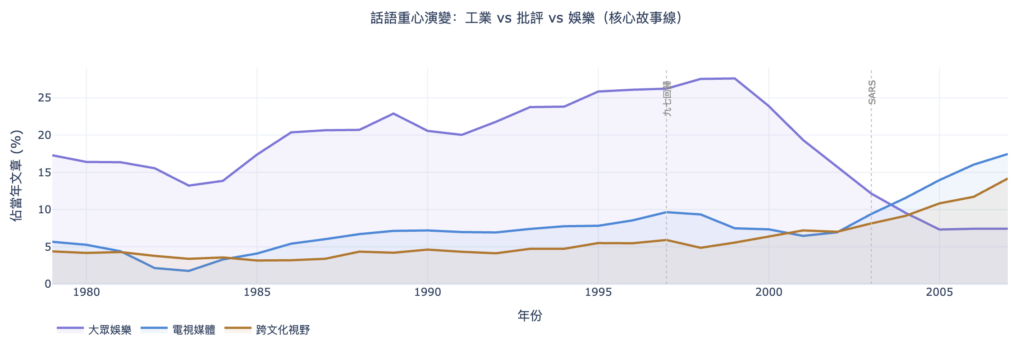
This chart tracks how thematic emphasis shifts across different historical periods.
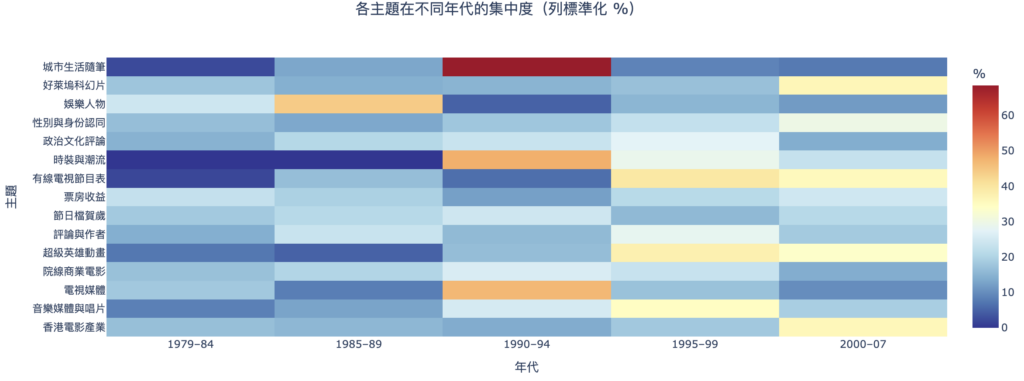
When these topics are examined over time, a clear pattern of transformation becomes visible. In the earlier years, cultural criticism and popular entertainment coexist as central components of the magazine’s identity. This balance gradually shifts during the 1990s, a period in which commercially oriented entertainment content becomes increasingly dominant, reflecting the peak of Hong Kong’s film industry.
Topic Heatmap
This heatmap visualises topic intensity across time, revealing long-term trends and structural transitions.
Following the late 1990s, however, this dominance declines markedly. The data suggests a reconfiguration of editorial focus, characterised by the rise of television-related content and a broader diversification of themes. This shift can be interpreted in relation to wider structural changes, including the fragmentation of media audiences and the emergence of new forms of cultural consumption.
Food as Cultural Mirror
The analysis of food-related vocabulary reveals a parallel narrative of cultural change that operates alongside the more explicit discourse of media industries. Rather than focusing on formal analysis or critical commentary, this dimension captures the textures of everyday life as reflected in language.

Food Mention Density by Category
This figure compares the frequency of food-related terms across editorial categories.

Top Food Terms by Decade
This chart illustrates how culinary references change over time, reflecting shifting cultural influences.
Across the three decades under study, certain patterns become apparent. References to coffee remain consistently prominent, suggesting its role as a marker of modern urban lifestyle. During the 1990s, there is a noticeable increase in references to Japanese cuisine, which may be associated with shifting regional influences and changing consumer preferences. In the 2000s, locally rooted food terms regain visibility, indicating a renewed emphasis on local identity.
Taken together, these patterns suggest that food vocabulary can serve as a sensitive indicator of cultural orientation, capturing shifts that may not be immediately apparent in more formal discourse.